
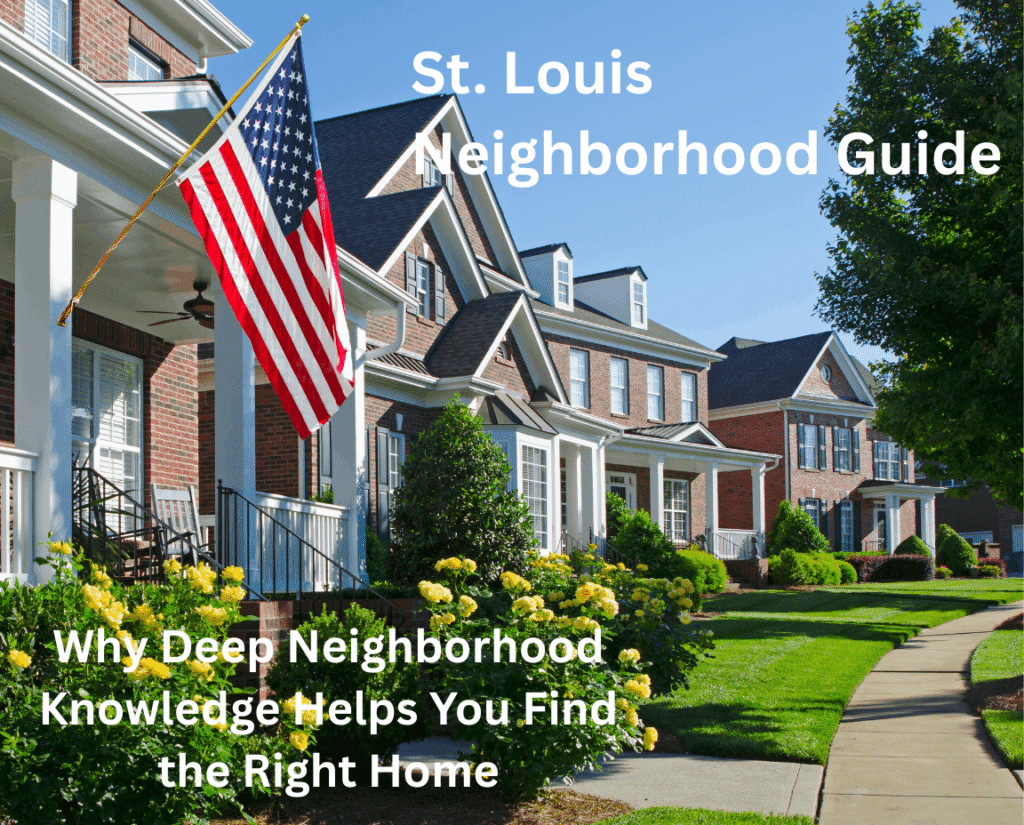
A comprehensive St. Louis Neighborhood Guide is essential whether you’re buying your first home, relocating for a corporate transfer, upgrading for a growing family, or preparing to sell. Having deep local expertise can make or break your experience. Real estate isn’t simply about finding a floor plan you like—it’s about finding the right St. Louis communities that align with your lifestyle, commute preferences, and long-term financial goals.
The St. Louis metropolitan area features hundreds of unique St. Louis neighborhoods, independent municipalities, and surrounding suburban enclaves. From historic brick row houses to modern outer-suburban developments, every pocket offers distinct architectural styles, local cultures, and micro-market conditions. Understanding these subtle differences helps buyers decide where to live in St. Louis with confidence, while empowering sellers to position their properties effectively in today’s competitive market.
Every Neighborhood Has Its Own Personality
No two communities in the region are identical. While home prices and square footage are major factors, every area offers a distinct daily living experience.
For instance, living in Lafayette Square or Soulard means surrounding yourself with 19th-century brick Victorians, lively patio dining, and walkable neighborhood parks. Contrast that with Clayton, where high-density luxury condos sit steps from corporate headquarters, or Kirkwood, where classic mid-century homes neighbor a bustling downtown historic train station and farmers market.
Key Personality Drivers
- Architecture & Charm: Historic 100-year-old brick masonry vs. modern master-planned subdivisions.
- Walkability & Vibe: High-energy urban dining corridors vs. quiet, residential cul-de-sacs.
- Amenities: Proximity to major hubs like Forest Park, Tower Grove Park, or expansive greenway trails.
- Community Culture: Local block parties, seasonal farmers markets, and civic events.
Key Takeaway: Evaluating specific micro-neighborhoods helps buyers discover the best neighborhoods in St. Louis that fit their day-to-day lives rather than relying solely on ZIP codes.
The Right Neighborhood Depends on Your Lifestyle
Because the region is so diverse, there is no single “best” place to buy—only the best fit for your current life stage.
| Buyer Persona | Primary Lifestyle Priorities | Typical St. Louis Sub-Markets |
| Growing Families | Top-rated school districts, large yards, suburban parks | Chesterfield, Ballwin, Webster Groves, Kirkwood, Ladue |
| Young Professionals | Dining, walkability, short commute to medical/tech hubs | Central West End, Tower Grove South, Downtown, Soulard |
| Relocating Personnel | Central highway access, strong resale values, turn-key homes | Clayton, Creve Coeur, Brentwood, Town & Country |
| First-Time Buyers | Starter price points, historic character, future appreciation | Shaw, Dogtown, St. Louis Hills, Lindenwood Park |
| Empty Nesters & Retirees | Main-floor living, low-maintenance villas, nearby healthcare | Wildwood, Sunset Hills, Frontenac, Des Peres |
Navigating Micro-Market Trends Across the Region
Real estate dynamics vary dramatically across short distances. Market conditions in St. Louis City often look completely different from trends in St. Louis County or St. Charles County, even for homes listed at similar price points.
Essential Neighborhood-Level Metrics
- Inventory Turnover: How quickly homes sell in high-demand pockets like Webster Groves vs. outer suburban corridors.
- Pricing Dynamics: Variations in price per square foot between historic renovations and new construction.
- Buyer Competition: Multiple-offer scenarios driven by school district boundaries or park proximity.
- Appreciation Potential: Identifying up-and-coming areas seeing public and private reinvestment.
Commute Dynamics and Major Corridors
Where you live directly affects daily convenience. Regional commute times are heavily dictated by your proximity to key highway arteries like I-64/US-40, I-44, I-70, and I-270.
- The Central Corridor: Sub-markets along I-64 (Clayton, Richmond Heights, Brentwood) offer central access to both Downtown St. Louis and West County corporate centers.
- South County & West County Commutes: Offer direct routes via I-44 and I-270, though rush-hour bottleneck patterns near major interchanges require planning.
- Transit & Alternative Commutes: Suburbs like Kirkwood, Maplewood, and Clayton offer direct access to MetroLink light rail or bus feeder routes into major employment hubs like BJC HealthCare and Cortex.
Understanding Distinct Housing Architecture
Architectural variety is one of the defining features of the St. Louis housing market. Different eras define different parts of town:
                  [ St. Louis Housing Architecture ]
                                 │
     ┌───────────────────────────┼───────────────────────────┐
     ▼                           ▼                           ▼
[ Historic City Enclaves ]  [ Inner-Ring Suburbs ]      [ Outer County Suburbs ]
  • Soulard / CWE / Shaw     • Ladue / Kirkwood         • Chesterfield / Wildwood
  • Historic Brick Victorians• Mid-Century Ranches      • Sprawling 2-Story Colonials
  • Craftsman Bungalows      • Cape Cods & Story-and-a-Half• New Construction Custom Builds
(Sources:)
Frequently Asked Questions
What are the best neighborhoods in St. Louis?
The best neighborhoods in St. Louis depend entirely on your personal priorities. For historic charm and vibrant nightlife, the Central West End, Soulard, and Lafayette Square are top choices. For established suburban feel with top-rated schools, Clayton, Kirkwood, and Webster Groves consistently lead the region.
How do I choose the right St. Louis neighborhood?
Start by identifying your non-negotiables: maximum commute time, budget, desired housing style (historic vs. new construction), and proximity to parks, dining, or top school districts. Touring different St. Louis communities at various times of day—and evaluating traffic patterns during peak commute hours—is essential before making an offer.
Which St. Louis neighborhoods are best for families?
Top areas for families include Webster Groves, Kirkwood, Chesterfield, and Ballwin, which offer renowned public school systems, expansive municipal parks, and vibrant community centers. Within city limits, family-friendly pockets like Lindenwood Park, Southampton, and Shaw offer strong community bonds and close proximity to historic parks.
What neighborhoods are best for first-time home buyers?
First-time buyers often find exceptional value in areas like Lindenwood Park, Dogtown (Hi-Pointe/Franz Park), Shaw, and Maplewood. These areas provide approachable price points, solid resale appreciation, historic character, and easy access to central employment corridors.
How important is neighborhood knowledge when buying a home?
Crucial. In St. Louis, market conditions, tax rates, school boundaries, and architectural maintenance requirements can vary dramatically within a radius of just a few blocks. Deep neighborhood insight prevents you from overpaying, helps you spot structural nuances common to specific architectural eras, and ensures strong long-term resale potential.
Which St. Louis neighborhoods are walkable?
If walkability is your main priority, consider urban enclaves like the Central West End, Soulard, Lafayette Square, and Tower Grove South. For walkable suburban main streets, Downtown Kirkwood, Old Webster (Webster Groves), Maplewood, and Clayton offer pedestrian-friendly business districts lined with local dining, boutique shops, and seasonal markets.
Ready to Find Your Ideal St. Louis Neighborhood?
Navigating where to live in St. Louis requires more than looking at online listings. Whether you’re buying, relocating, or selling, partnering with local experts gives you the competitive edge needed to achieve your real estate goals.
Compare Local Community Guides
For a central St. Louis County search, compare our guides to Clayton, Brentwood, Richmond Heights, and Maplewood.
For west and southwest county options, explore Kirkwood, Ladue, Des Peres, Ballwin, and Ellisville.
For a south county or nearby Jefferson County search, start with Mehlville, Fenton, and Arnold. Use these guides to build a shortlist, then verify commute routes, property costs, and school assignments for each address.
If everyday access is a priority, read about evaluating walkable neighborhoods and St. Louis condos and lofts.