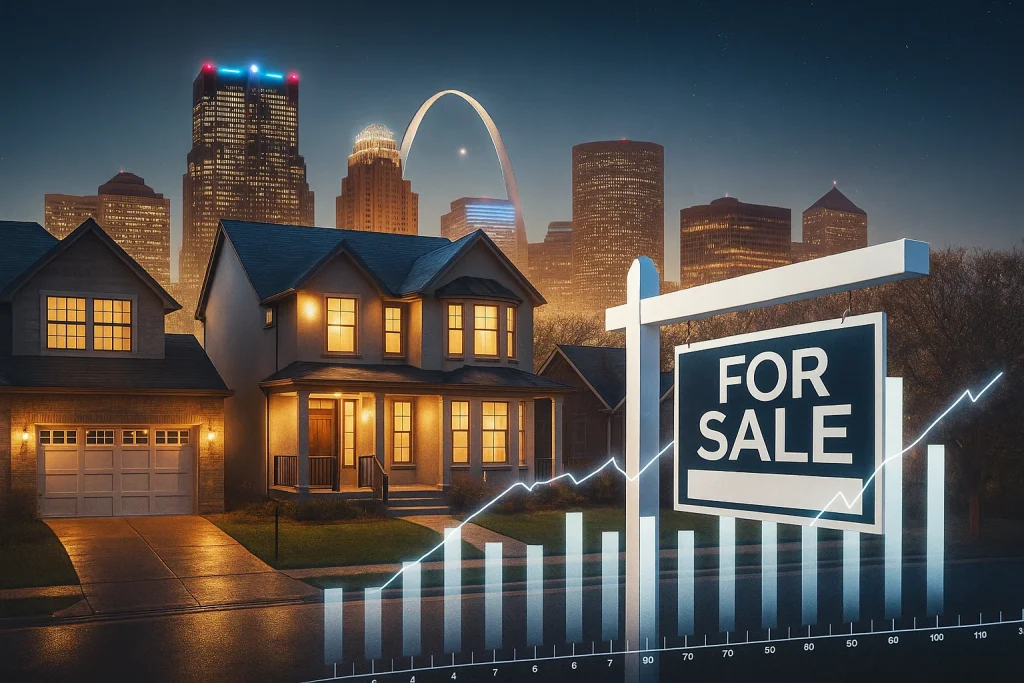
The St. Louis housing market 2025 remains a dynamic landscape, offering both opportunities and challenges for homeowners, buyers, and real estate professionals. As real estate trends evolve, understanding local market data, average home prices, salary expectations, and overall cost of living becomes critical for making informed decisions.
Understanding the St. Louis Housing Market 2025
Located along the Mississippi River in eastern Missouri, St. Louis offers a unique housing environment. Known for its affordability when compared to major metro areas, the city has experienced steady home price growth over recent years. In 2025, St. Louis remains a popular destination, offering a blend of budget-friendly properties and expanding job opportunities. The market varies widely depending on factors like neighborhood amenities, square footage, and the number of bedrooms. From modern condos in the city core to larger family homes in Saint Louis County, there are diverse options to fit a variety of buyer needs.
What Is the Average Home Sale Price in St. Louis?
According to current data from the St. Louis Realtors, the average home sale price in the area is approximately $280,000 as of December 2024. This represents a 12% year-over-year increase, indicating sustained growth. For single-family homes, the average price hovers around $279,900 with an average of $150 per square foot. Condos sell for roughly $250,000, while luxury homes exceed $500,000, sometimes reaching $300 per square foot. Prices can fluctuate significantly by neighborhood, with some areas seeing homes sell under asking, while others command premiums due to high demand and desirable amenities.
2025 Market Trends in St. Louis Real Estate
This year, the St. Louis housing market is showing more stability compared to the highly competitive climate of the previous few years. Market dynamics vary by location, with some areas experiencing a buyer’s market due to increased inventory, while others remain competitive seller’s markets—especially near top-rated school districts. In balanced neighborhoods, pricing has remained consistent as supply and demand align. Overall, continued interest in the metro area is reflected in vigorous pending sales activity and shorter days on market in sought-after zip codes.
What’s Driving Home Prices in Missouri?
Several factors are contributing to rising home prices across Missouri, with job growth at the forefront. The expansion of industries like healthcare and technology in St. Louis is attracting new residents who are relocating for employment opportunities. Infrastructure improvements, including major highway projects, are enhancing accessibility and increasing the appeal of suburban neighborhoods. Natural risk factors such as flooding and tornado zones also play a role in home valuations, with properties in high-risk areas often priced lower.
Comparing the Cost of Living in St. Louis
St. Louis remains an affordable alternative to other Midwestern cities. Whether you’re purchasing or renting, costs are significantly lower than in markets like Chicago or Kansas City. In addition to accessible housing, transportation remains cost-effective. MetroLink and MetroBus services offer reliable transit options, and many neighborhoods feature high Walk Scores, making car-free living more feasible.
Why Relocating to St. Louis Is on the Rise
People are moving to St. Louis for a combination of economic and lifestyle benefits. A strong job market, particularly in logistics, finance, and healthcare, is a significant draw. Homebuyers also appreciate the lower cost of living compared to coastal cities. The city’s cultural scene—featuring museums, historic districts, and diverse restaurants—enhances its appeal, particularly for those seeking a well-rounded lifestyle.
Transportation and Accessibility in St. Louis
St. Louis excels in accessibility, which strengthens its real estate value. Public transportation is reliable, and the city’s layout supports walkability in many central neighborhoods. Easy access to I-64, I-70, and I-44 makes suburban commuting straightforward. Lambert International Airport further connects the region to national and international destinations.
Key Tips for Buyers and Sellers in 2025
In today’s market, sellers should emphasize local amenities, such as parks and schools, to attract motivated buyers. Buyers should pay close attention to recent comparable sales, especially in neighborhoods where homes are closing below the listing price. By staying informed, both buyers and sellers can navigate the St. Louis housing market 2025 with confidence.