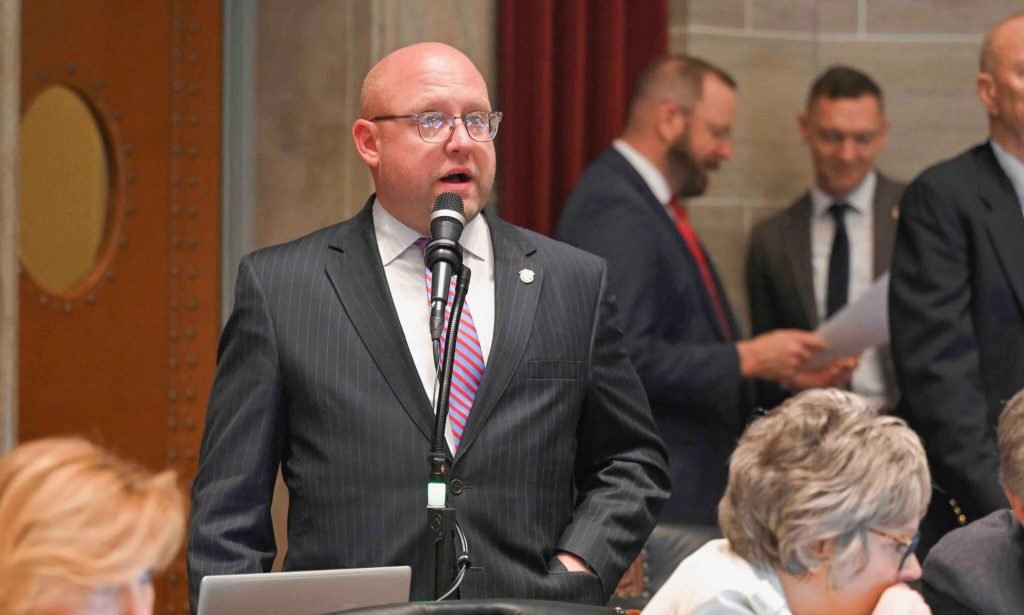
*Missouri House Speaker Pro Tem Chad Perkins of Bowing Green speaks during debate Feb. 11 on his bill exempting capital gains from the state income tax (Tim Bommel/Missouri House Communications).*
A new Missouri income tax cut officially took effect Thursday, eliminating state income tax on profits from the sale of investments. Alongside this major change, smaller tax adjustments will also remove sales tax from diapers and feminine hygiene products.
Under state law, all bills passed during a regular session go into effect on August 28 unless otherwise specified. This new capital gains exemption applies retroactively to all gains earned since January 1, meaning taxpayers will see the impact reflected in their April income tax returns.
First State to Eliminate Capital Gains Tax
With this law, Missouri becomes the first state in the nation to fully exempt profits from the sale of assets such as stocks, real estate, and cryptocurrency from income tax.
“The Department of Revenue is already preparing for next year’s tax season and we are making the adjustments required to accommodate this and other new laws that affect taxpayers,” said Trish Vincent, director of the state revenue agency.
Revenue Impact
The exemption is projected to reduce revenue by $157 million in the current fiscal year and approximately $111 million annually going forward. However, a fiscal note updated June 23 warned that the impact could be much higher.
In 2022, Missouri taxpayers claimed $13.3 billion in capital gains income on their federal tax forms. At the state’s top income tax rate of 4.7%, that would equal roughly $625.6 million in lost revenue by fiscal year 2026, according to state estimates.
The Institute for Tax and Economic Policy raised similar concerns earlier this year, noting the difficulty of predicting long-term impacts without full access to state tax data.
Budget Concerns
The change comes as Missouri braces for future financial challenges. Federal tax changes and new costs for programs like Medicaid are expected to put additional strain on the budget.
When signing the state’s budget in June, Governor Mike Kehoe vetoed about $300 million in earmarked spending and warned of a looming shortfall. The Office of Administration’s Division of Budget and Planning estimates a nearly $1 billion gap in general revenue starting in fiscal year 2027, with spending in FY 2026 already projected to exceed ongoing revenues by the same amount.
Content for this summary was derived from original reporting by Missouri Independent