Photo credit: Jackson Cooper/St. Louis Magazine
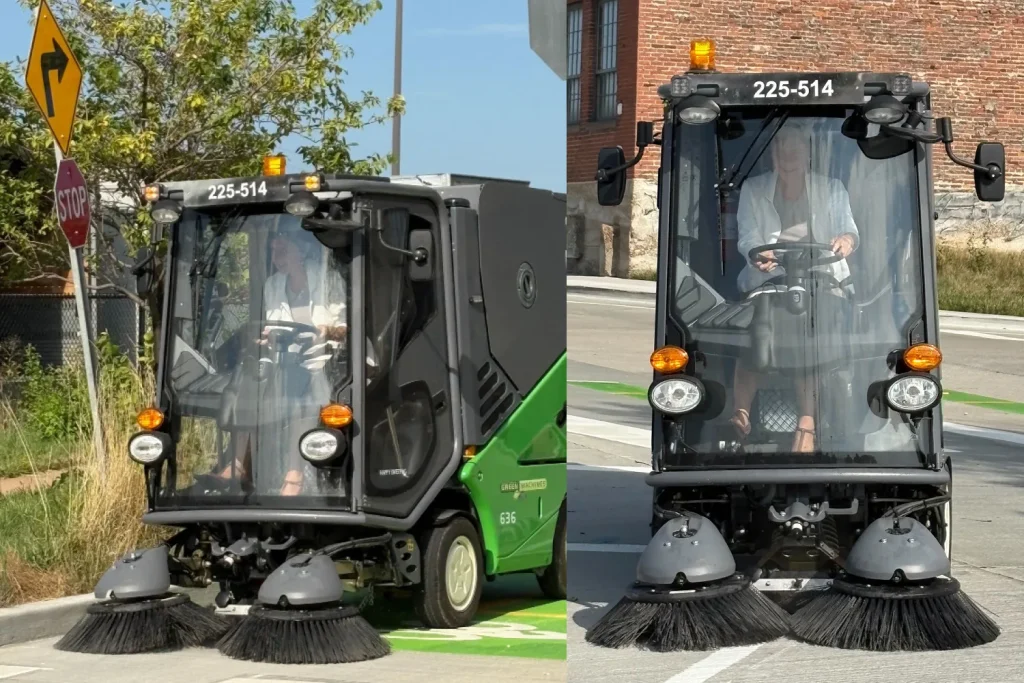
The City of St. Louis introduced “Archie,” a compact street sweeper designed for protected bike lanes and other narrow public spaces, in August 2025. The Green Machine 636 gives the Street Department a way to remove trash, dirt, and debris from areas that standard street sweepers cannot easily reach.
Why St. Louis Added a Dedicated Bike-Lane Sweeper
According to the City of St. Louis Street Department, Archie combines sweeping and vacuum capabilities. Its sweeping width can be adjusted from five feet to 6.25 feet, allowing it to work in protected bike lanes, shared-use paths, pedestrian facilities, and other constrained infrastructure.
Debris such as broken glass, loose gravel, leaves, and litter can create hazards for people using narrow cycling facilities. A smaller maintenance vehicle helps the city address those conditions without relying on equipment built for full-width traffic lanes.
Archie’s First St. Louis Demonstration
The city scheduled Archie’s inaugural sweep for August 4, 2025, along the protected bike lanes on the 2200 block of Scott Avenue. Mayor Cara Spencer and Street Department representatives introduced the equipment and demonstrated how it could serve the city’s transportation network.
The nickname “Archie” refers to the Gateway Arch, giving the new maintenance vehicle a distinctly St. Louis identity.
Where and How the Sweeper Is Used
The Street Department said the machine would initially be used as needed or by request while staff evaluated its capabilities, daily range, and hopper capacity. The city identified the Union Boulevard protected bike lane, 7th Street cycle track, Tower Grove Connector, Gateway Mall, and pedestrian walkways on overpasses and bridges as examples of locations the equipment could clean.
A broader schedule can be developed as the city compiles eligible locations and learns how much ground Archie can cover during normal operations. Residents seeking current maintenance information should use the City’s official Street Department resources or contact their alderperson.
What Archie Means for Local Infrastructure
Building protected lanes is only one part of a safe transportation network. Regular cleaning and maintenance help keep those facilities usable after storms, construction activity, seasonal leaf fall, and ordinary street debris.
For people comparing locations and everyday amenities across the region, MPISTL’s St. Louis community guides provide additional neighborhood-level information.
Frequently Asked Questions
What is Archie?
Archie is a compact Green Machine 636 street sweeper used by the City of St. Louis to clean protected bike lanes, shared-use paths, pedestrian areas, and other narrow public spaces.
Why can’t a regular street sweeper clean these areas?
Traditional street sweepers are generally too wide for narrow or physically separated bicycle and pedestrian facilities.
Does Archie follow a fixed schedule?
The City initially planned to use the sweeper as needed or by request while evaluating its capacity and developing a broader list of service locations.